
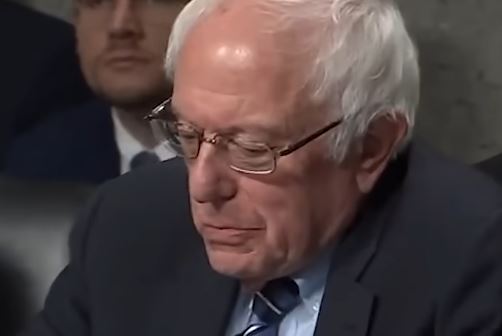
Contradictions frequently start discussions about Bernie Sanders’ wealth. This politician, who became well-known across the country for criticizing billionaires and economic inequality, is now a millionaire. Critics frequently bring up this point, sometimes raising an eyebrow. However, the story behind the figure is much more nuanced than the headline implies, as is the case with most things in politics.
The wealth narrative is almost out of place in Burlington, Vermont, where Sanders established his early political career. For many years, he was more renowned for his rumpled suits, gravelly speeches, and unwavering resolve as a local activist than for his wealth. Sanders reportedly drove a beat-up Volkswagen that looked more like it belonged to a college student than a politician when he was the city’s mayor in the early 1980s. His friends characterized him as thrifty, even humorous. Simply put, money wasn’t the main focus of his life at the time.
| Category | Details |
|---|---|
| Full Name | Bernard Sanders |
| Date of Birth | September 8, 1941 |
| Age | 84 (as of 2026) |
| Birthplace | Brooklyn, New York, United States |
| Profession | Politician, Author |
| Political Role | U.S. Senator from Vermont |
| Political Affiliation | Independent (aligned with Democrats) |
| Estimated Net Worth | Around $2.5 million – $3 million |
| Major Income Sources | Senate salary, book royalties, pensions, real estate |
| Notable Books | Our Revolution, Bernie Sanders Guide to Political Revolution, It’s Okay to Be Angry About Capitalism |
| Reference | https://www.forbes.com |
Slowly, almost silently, that changed.
Bernie Sanders’ net worth is estimated to be between $2.5 million and $3 million as of late. That number is low by American political standards. In actuality, a large number of members of Congress have much larger fortunes, frequently derived from inheritance or business endeavors. Sanders’ course appears to be different. His 2016 presidential campaign significantly increased his public profile, which contributed to a significant portion of his financial rise occurring relatively late in life.
The unexpected outcome of that campaign was to make Sanders a publishing sensation.
His best-selling book Our Revolution was followed by some other works that examined political activism, economic inequality, and the annoyances of contemporary capitalism. Financial disclosures show that between 2011 and 2023, Sanders made about $2.5 million from publishing, with some years earning hundreds of thousands of dollars in royalties. One of the more ironic episodes in recent American politics was witnessing the book industry adopt a democratic socialist.
Sanders himself has a tendency to dismiss the criticism with a direct justification. He has stated that writing a best-selling book and becoming a millionaire are not particularly difficult tasks.
Books, of course, are just one aspect of the financial picture.
Sanders receives a government salary, which is currently approximately $174,000 annually, like all other U.S. senators. He is also qualified for federal pension benefits after decades of public service, which analysts predict could be worth tens of thousands of dollars a year for the remainder of his life. A smaller pension from his tenure as Burlington’s mayor is also present, serving as a reminder that he has over 40 years of political experience.
The real estate comes next.
The fact that Sanders and his spouse, Jane O’Meara Sanders, have owned three houses at various times has occasionally turned into a political talking point. Their primary home, which they bought for roughly $405,000 in 2009, is located in a middle-class Burlington neighborhood. Additionally, a row house near the Capitol in Washington, D.C., was convenient for a senator who works in Congress for a large portion of the year. The most well-known of these is probably a lakefront vacation home with a view of Lake Champlain in North Hero, Vermont.
The most attention is usually drawn to the lake house. It was acquired in 2016 for about $575,000 and has views of the shoreline that appear particularly tranquil during the summer. The purchase was quickly seized upon by critics, who claimed it was evidence that Sanders had turned into the kind of affluent American he frequently criticizes.
However, the truth is not as dramatic. Retirement funds and book advances provided the majority of the home’s funding. Purchasing a vacation home after decades of employment is not particularly uncommon for many Americans who are getting close to retirement age.
Nevertheless, the story has a sense of tension.
Sanders has warned about concentrated wealth and the political power of billionaires for a large portion of his career. In his speeches, he frequently uses language that seems almost moral rather than just economic when discussing the “top 1 percent.” It produces a peculiar political optics to see him join the ranks of millionaires, even relatively modest ones. Hypocrisy is perceived by some observers. Others see evidence that the system he criticizes is sufficiently expansive to compensate even its most vocal detractors.
It’s difficult to ignore the fact that Sanders appears a little impatient with the discussion. He has indicated in interviews that he is not discussing personal wealth. He contends that extreme wealth—billionaires whose fortunes reach tens or hundreds of billions while regular workers struggle with housing and healthcare costs—is the issue.
It remains to be seen if voters will accept that distinction.
For the time being, Bernie Sanders’ net worth reflects his career in that it is unusual, somewhat contradictory, and shaped more by perseverance than by unexpected wealth. After struggling to make ends meet in Vermont, the man went on to write best-selling books and purchase lakefront real estate. It’s not precisely the script that people had in mind decades ago.
However, American politics is rarely scripted in advance. And Sanders still appears content to live with that contradiction after all these years.