
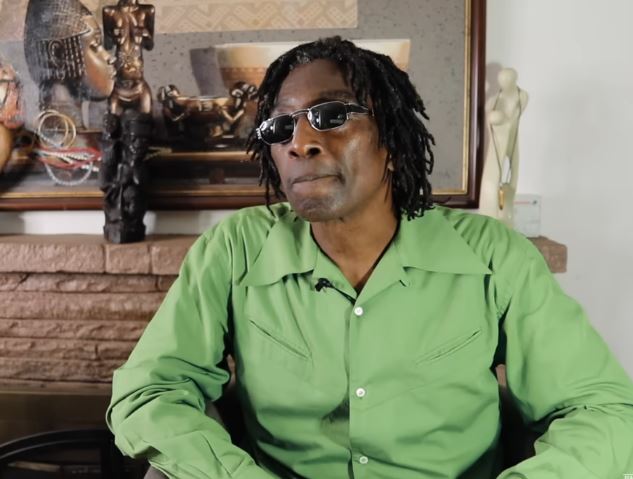
Since Kirk Burrowes’ influence in hip-hop has been more like a producer’s hidden tag than a garish logo, always present but rarely announced with a drumroll, the question of his net worth has become a popular search term once more, but it almost seems too small for the story that goes along with his name.
| Category | Information |
|---|---|
| Name | Kirk Burrowes |
| Profession | Music executive, brand strategist, entrepreneur |
| Primary Roles | Co-founder and founding GM of Bad Boy Entertainment; former label president |
| Current Role | Chief Executive Officer, Pop Life Branded Entertainment |
| Based In | New York, New York, United States |
| Known For | Guiding careers of Mary J. Blige, Faith Evans, Ma$e, The Notorious B.I.G.; early work with Ruff Ryders and Aftermath |
| Estimated Net Worth | Often described in mid–six-figure to low-million range; not formally confirmed |
| Key Skills | Brand architecture, pop culture insight, artist development, corporate partnerships |
| Signature Wins | Mary J. Blige brand deals, “Family Affair” era, early Bad Boy infrastructure, “Chicken Noodle Soup” ringtone-era deal |
| Reference Link | https://www.linkedin.com/in/kirkburrowes |
Even though his position as co-founder and founding general manager positioned him as the backbone of a label that would eventually be valued around the hundred million dollar mark at its commercial height in the late nineties, many people only mention Sean “Diddy” Combs when discussing the origins of Bad Boy Records. As a result, the modest estimates of Kirk Burrowes’ net worth feel remarkably similar to a footnote on a book he helped write.
The Netflix documentary series “Sean Combs: The Reckoning,” which is produced by Curtis “50 Cent” Jackson, has shed new light on Burrowes over the past year. In this series, jurors from Combs’ criminal trial describe unsettling footage and uncomfortable testimony, and Burrowes appears as a former insider willing to revisit painful memories, including an incident he claims to have witnessed involving Combs slapping his own mother, which he recounts with obvious emotion that suggests a long-suppressed conflict between loyalty and truth.
Burrowes did something incredibly courageous for a seasoned executive by entering that documentary, thereby opening a door into a period that many industry leaders would have preferred to keep closed. This choice has rekindled interest in what actually transpired behind Bad Boy’s glossy exterior as well as what a man with his resume actually took home financially after the glory years faded.
Since Kirk Burrowes once owned a reported 25 percent stake in a label that produced global hits, fashion trends, and one of the most talked-about moguls of modern music, his net worth is likely in the mid-six-figure to low-million band, according to publicly available reporting and long-running online chatter. This raises the straightforward but poignant question of who really benefits when culture is turned into commerce.
Burrowes claims he was coerced—even threatened with a baseball bat—into giving up his 25 percent stake in Bad Boy, according to lawsuits and interviews that have recently surfaced. This claim portrays his net worth as evidence of how power and leverage can drastically reduce long-term wealth for even the most important collaborators, particularly those who are more focused on the work than on protective contracts, rather than as a measure of career success.
This kind of conflict between creative collaboration and equity distribution is especially typical for early-stage labels, but in this instance, the stakes were exceptionally high because Bad Boy was not only putting out records but also changing popular taste. Burrowes served as a guiding executive, coordinating music, marketing, and image while another partner perfected the art of front-facing celebrity and unrelenting self-branding.
Kirk Burrowes has, time and again, stepped into chaotic or transitional moments and quietly re-engineered brands, artists, and strategies until they made sense again. This is evident if you look beyond the Bad Boy chapter of his career. For example, he helped Mary J. Blige stabilize her career after grief and burnout, or he advised Dr. Dre as he moved into his post-Death Row imprint that would later become Aftermath, long before headphones and mega-deals made that name a shorthand for massive exits.
After being devastated by The Notorious B.I.G.’s murder in 1997, Burrowes received a call from Mary J. Blige, who essentially asked him to guide her career through a challenging, emotionally taxing period. From 1998 to 2002, he managed her through albums like “Share My World,” “Mary,” and “No More Drama.” During this time, she finally achieved financial stability and received her first significant royalty checks, a detail he has expressed with a mixture of pride and disbelief.
Through strategic alliances, Burrowes and consultant Karen Mason helped Mary J. Blige establish over thirty brand relationships. She was paired with Marvel for a superhero project, aligned with Pepsi, placed in Dolce & Gabbana and MAC campaigns, and essentially transformed from a powerhouse vocalist into a cross-category brand force—a change that was especially advantageous for her long-term cultural positioning and her bank account.
Burrowes’ ability to connect the right people at the right time can be remarkably effective at unlocking new levels for established artists, even when his own net worth statement does not reflect those leaps as directly as a producer’s point or a founder’s equity slice might. Burrowes used his relationship with Dr. Dre to help create the environment that gave birth to Mary J. Blige’s single that ultimately gave her a number-one pop hit, “Family Affair.”
Burrowes later demonstrated how incredibly versatile his instincts are when he spotted an independent DJ named Webstar and a playful track called “Chicken Noodle Soup.” He then turned that quirky tune into a Universal Republic deal, where the song became a ringtone smash and the video became a viral phenomenon on early social platforms, demonstrating that he understood emerging consumer behavior long before it became a case study. This was later, when the ringtone era was just starting to change how young listeners discovered music.
The Netflix documentary has been the subject of a lot of online commentary in recent days, portraying Kirk Burrowes as both a truth-teller and a cautionary tale. He remained faithful to the end and was eventually forced out of the empire he helped create, but his next career chapter indicates a more optimistic path because he has taken those difficult lessons and applied them to Pop Life Branded Entertainment, a company that aims to provide content to platforms and brands in ways that feel innovative rather than exploitative.
This role is very effective for someone with his background because it allows him to leverage decades of intuition without having to chase chart positions or fabricate drama to stay visible, and his network, which includes both newer creatives and classic Bad Boy alumni, gives him an incredibly durable base to build from. Pop Life positions Burrowes as an ambassador between creators and companies, translating what moves audiences into language that marketing teams and executives can actually act on.
Because he is familiar with both the corporate metrics that reassure boardrooms and the emotional narratives that connect with fans, working with someone like Kirk Burrowes can be surprisingly inexpensive for medium-sized brands when compared to the costs of high-profile agencies. On the plus side, this can result in a much faster growth in cultural relevance, effectively streamlining campaigns and freeing up teams to concentrate on long-term strategy and product.
Although Kirk Burrowes’ current net worth may not be comparable to the enormous wealth of celebrities like Diddy, Jay-Z, or Dr. Dre, it has a distinct meaning and functions as a sort of report card on how the industry has traditionally treated its unsung heroes, many of whom established careers, labels, and even new sources of income only to have the majority of the benefits taken by those in charge of contracts and public perceptions.
Kirk Burrowes’ story is likely to be viewed as a turning point in the years to come, as lawsuits, documentaries, and investigative reporting continue to uncover more details about legacy labels and their founders. It will be emphasized as a case that demonstrates why equity discussions, fair credit, and shared ownership are not merely legal formalities but crucial instruments for safeguarding the individuals who are actually building.
According to a compelling argument, Kirk Burrowes’ net worth is due for an upward correction in the future. This is due to the growing demand for executives who can relate lessons learned from the past to current conflicts and guide artists and brands through an era characterized by social media, streaming, and a never-ending appetite for authentic storytelling—an area in which he has significantly increased his visibility without compromising integrity.
His journey provides a clear lesson for young executives: creating iconic moments is not enough; you also need to negotiate for the foundation you stand on. However, his tenacity, ongoing innovation, and refusal to back down from difficult realities suggest that financial trajectories can be rewritten and that someone quietly influencing culture from the sidelines can still, with time and strategy, turn an underappreciated legacy into a future that is both financially just and creatively fulfilling.