
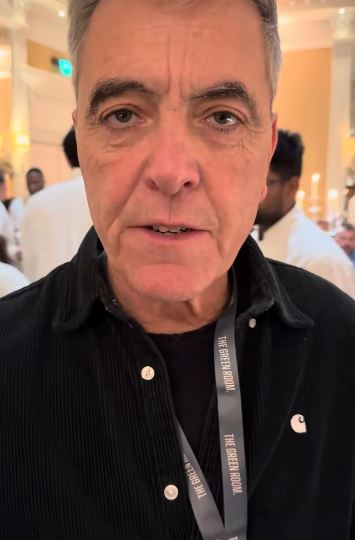
It’s easy to forget that one of television’s most well-known actors once grew up nearby, kicking a football against a wall on a peaceful street in Ballymena, Northern Ireland, where modest brick houses sit close to one another, and the wind frequently carries the subtle scent of the countryside. James Nesbitt, who is now well-known on British television and in foreign films, has amassed wealth covertly throughout his career. As of 2026, estimates suggest James Nesbitt’s net worth sits somewhere between £8 million and £11 million, though the exact figure remains slightly fuzzy.
Actors who make their living from a combination of private companies, royalties, and salaries are accustomed to this uncertainty. But Nesbitt’s wealth wasn’t instantaneous. It came gradually, piece by piece, and occasionally in unexpected ways.
| Category | Details |
|---|---|
| Full Name | William James Nesbitt |
| Date of Birth | January 15, 1965 |
| Age (2026) | 61 |
| Birthplace | Ballymena, County Antrim, Northern Ireland |
| Profession | Actor, Producer |
| Years Active | 1981–present |
| Famous Roles | Cold Feet, The Hobbit trilogy, The Missing, Line of Duty, Murphy’s Law |
| Businesses | Brown Cow Films Ltd; G&H Film and Television Services |
| Estimated Net Worth (2026) | Roughly £8–£11 million (estimated based on company assets and acting income) |
| Awards | British Comedy Award, National Television Award, OBE |
| Reference | https://en.wikipedia.org/wiki/James_Nesbitt |
Cold Feet, the late 1990s television drama that made Nesbitt a household name in Britain, is often the first thing that viewers remember about him. With Manchester streets shining after rain and characters navigating relationships with equal parts humor and anxiety, the show had an oddly cozy feel. Adam Williams was relatable in a way that television characters seldom are, thanks to Nesbitt’s portrayal. It’s difficult to ignore how well he carried scenes when watching those early episodes now.
The monetary benefits arrived gradually.
Nesbitt’s success on television led to roles in movies, such as Waking Ned and The Hobbit trilogy, in which he portrayed Bofur, the devoted dwarf with the big hat and even bigger smile. He was part of one of the most lucrative fantasy franchises of the past ten years thanks to those movies. Even a supporting role in a blockbuster can bring substantial paydays—sometimes far more than television dramas.
However, James Nesbitt’s 2026 net worth cannot be entirely explained by his actions alone.
The actor seems to have developed a small business ecosystem around his career behind the scenes. His production company, Brown Cow Films Ltd, reportedly held accumulated profits exceeding £5.8 million by 2022, according to company filings. It appears that Nesbitt has been quietly making money away from the spotlight by producing television content and occasionally paying dividends.
Then there’s Hollywood, Northern Ireland-based G&H Film and Television Services. According to recent financial disclosures, that company, which specializes in logistics and support services for film productions, had net assets of over £1.8 million. It’s the kind of business that frequently produces consistent revenue but seldom makes headlines. Film crews require logistical support, transportation, and equipment. It must be supplied by someone.
Nesbitt might have realized this before many actors did.
One trend emerges when observing the film industry over the last ten years: actors who diversify typically amass wealth that lasts. When acting roles change, stability is provided by production companies, real estate investments, and creative collaborations. In that regard, Nesbitt’s strategy seems subtly calculated.
However, his wealth is not the first thing that people think of when they think of him.
A distinct picture of a slightly mischievous storyteller with a Northern Irish wit that rarely seems prepared comes to mind when you spend time reading interviews or watching his TV appearances. Even after working in the field for decades, his public image still lacks polish. It’s difficult to ignore how at ease he seems when talking about his childhood, frequently recalling insignificant details about his early acting roles or school.
For example, one early job paid £1 per hour to call numbers at a bingo hall by the sea. Bright lights, the sound of nearby arcade machines, and a teenage Nesbitt reading numbers to a group of vacationers make for an almost cinematic image.
His later success feels more like a long climb and less like sudden fame because of that kind of start.
Additionally, his career coincided with more significant historical events. Nesbitt played civil rights activist Ivan Cooper in the television drama Bloody Sunday, which dramatized the Derry killings of 1972. The part, which many critics still cite as one of his most potent performances, demanded emotional depth and meticulous preparation. Additionally, it served as a reminder to viewers that Nesbitt was capable of much more than lighthearted drama on television.
He continued to switch between genres over the years, including psychological dramas like The Missing, crime series like Murphy’s Law, and sporadic cameos in shows like Line of Duty. Some roles were long, while others were short. However, they built a long, stable career together.
Longevity is important in terms of finances.
Despite not earning blockbuster salaries, actors who maintain constant visibility have a tendency to amass wealth. Repeat broadcasts, streaming rights, and residual payments can all silently produce revenue for years. The financial tail of a successful series has gotten longer as a result of television networks and streaming services continuously reusing older shows.
It still takes some guesswork to determine James Nesbitt’s net worth in 2026. His companies’ public filings offer hints but not the whole story. International film payments, personal investments, and property holdings are still mostly kept secret.
It’s also possible that his wealth keeps increasing.
Over the past ten years, Northern Ireland‘s film industry has grown dramatically, attracting Hollywood and European productions. Crews, studios, and support companies have followed. The value of Nesbitt’s businesses may rise in tandem with the industry if they continue to be a part of that ecosystem.
When viewed in a broader context, Nesbitt’s financial tale is similar to his acting career in that it is steady rather than ostentatious and based on perseverance rather than abrupt successes.
And maybe that’s appropriate.
In Northern Ireland, the actor who once stood on a tiny stage hoping to get the next part has quietly amassed a respectable career and a comfortable fortune. As you watch that develop over time, you get the impression that wealth wasn’t the main objective.
It just happened to come along.