
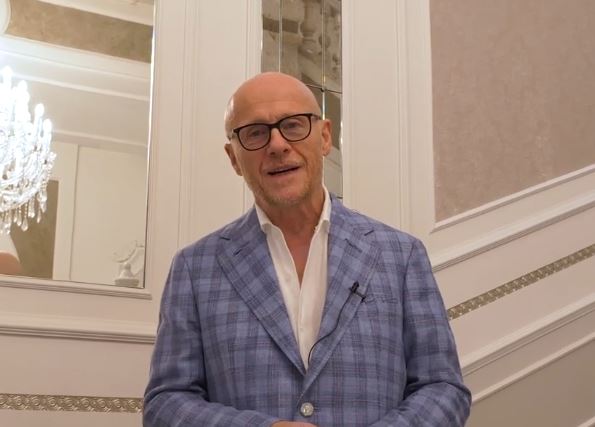
John Caudwell’s name keeps showing up with a remarkably constant number next to it in recent days when rich lists are updated and fortunes rise and fall like stock charts on a nervous trader’s screen, hovering around $3.5 billion in estimates that treat his net worth as both solid and still quietly expanding.
| Category | Information |
|---|---|
| Full name | John David Caudwell |
| Date of birth | 7 October 1952 |
| Age | 73 |
| Place of birth | Birmingham; raised in Stoke-on-Trent, England |
| Nationality | British |
| Education | Berry Hill High School; engineering apprenticeship at Michelin |
| Occupation | Entrepreneur, investor, philanthropist; founder of Phones 4u |
| Main source of wealth | Mobile phone retail (Caudwell Group / Phones 4u), later property, private investments |
| Estimated net worth (2025) | Around $3.5 billion, broadly aligned with £1.5–1.7 billion ranges in rich lists |
| Key businesses built | Midland Mobile Phones, Caudwell Group, Phones 4u, Singlepoint; later Caudwell Collection and Caudwell Investments |
| Residence | Broughton Hall in Staffordshire, plus homes in Mayfair, London and Monaco |
| Partner and family | Partner Modesta Vžesniauskaitė; seven children from several relationships |
| Flagship assets | Proceeds from £1.46 billion Phones 4u sale; £250 million Mayfair mansion; superyacht Titania used for charter and fundraising |
| Charities | Founder of Caudwell Children and Caudwell LymeCo; major supporter of multiple health and child-focused causes |
| Giving commitment | Signatory to the Giving Pledge, promising at least 50% of his fortune to charity, personally committing to about 70% |
| Reference link | https://www.forbes.com/profile/john-caudwell |
That amount has hardly changed in the last ten years, which is remarkably comparable to a well-maintained engine that rarely stalls. Although Phones 4u is no longer on the high streets, the money he made in 2006 when he sold the Caudwell Group for £1.46 billion has been recycled, reinvested, and used in a variety of ways.
He likes to remind interviewers that he began far from Mayfair penthouses and private jets. He moved from Birmingham to Stoke-on-Trent as a child, dropped out of school without an A-level, and started working as an apprentice at Michelin, where he oversaw engineering teams for long shifts before leaving to manage a small corner store and a mail-order business for biker apparel.
Because it forced him to be extremely efficient with time and money and ingrained an almost stubborn sense that progress comes from incremental improvements rather than sudden miracles, that early double life—quietly stacking shelves and experimenting with side hustles—has proven incredibly versatile as a training ground for later success.
When he first noticed mobile phones in the late 1980s, they were still bricks carried by show-offs. He and his brother Brian brought just 26 Motorola phones to Midland Mobile Phones, paying about £1,350 apiece, and it took them eight months to sell them to people who no one would consider early adopters, such as television repairers, taxi drivers, and plumbers.
His enthusiasm was not at all diminished by that slow start; rather, it strengthened his belief that if you believe in a trend, you stick with it while others laugh. He compared the growth in mobile demand to a swarm of bees gradually finding a new nectar source—first buzzing around, then suddenly thousands vying for the same flower.
Midland developed into the Caudwell Group during the 1990s, combining wholesale businesses, a network provider named Singlepoint, and the retail chain Phones 4u. Initially a simple storefront, the company proved remarkably adept at navigating complex tariffs and promoting deals that made sense to customers as contracts became more intricate.
John Caudwell’s net worth changed almost instantly when Vodafone purchased Singlepoint for £405 million in 2003, and private equity firms later paid £1.46 billion for the group. However, he did not retire to a sun lounger; instead, he started rerouting funds into real estate, venture-style investments, and, most notably, charitable infrastructure.
While his Staffordshire estate at Broughton Hall and a base in Monaco provide an almost cinematic backdrop for interviews that frequently shift quickly from kitchens and cold plunges to tax and inequality, his Mayfair project, 1 Mayfair, has been characterized as particularly innovative, transforming a drab parking lot and hotel site into ultra-prime residences.
Behind the sunlit decks, there was a more somber agenda, using prominent locations as platforms for fundraising dinners, mentoring events, and the Life-Changers Circle he organizes for fellow donors. During the pandemic, many people got a distant glimpse of his life through features that showed him on the superyacht Titania with Modesta and their young children.
The flagship International Children’s Centre in Staffordshire is a tangible example of how a telecom fortune can be transformed into something incredibly durable. He has raised over £120 million for Caudwell Children, a charity that offers equipment, therapies, and autism services to thousands of families, by utilizing his business network.
As a diagnosis, family support, and research hub, the center itself is built to be incredibly dependable. It unites academics and clinicians under one roof, streamlines operations, and relieves parents of endless waiting lists. For many of those families, the charity’s support feels surprisingly affordable because the donors do the heavy lifting.
His second major charitable endeavor, Caudwell LymeCo, was born out of a very personal crisis when he and several family members were diagnosed with Lyme disease. He has called the illness “heartbreaking,” but he has also drawn attention to the increasing convergence of personal experience and policy, advocating for significantly increased awareness and funding for research.
Even though the science surrounding chronic Lyme disease is still up for debate and the discussions can be emotionally charged, his resolve to support his views financially demonstrates how net worth can be used to challenge complacency rather than just provide comfort in the context of public health debates.
One lesson is obvious for early-stage startups studying his story: he made his fortune by getting close to a game-changing technology early on and then leaving decisively rather than hanging on; later, he diversified holdings into real estate, fashion, e-commerce, and impact-oriented investments, creating a portfolio that feels incredibly clear in its priorities.
He has created a structure that resembles an ecosystem rather than a pile of cash by combining private equity, philanthropy, and real estate. Revenue-generating projects support charities, which in turn boost his credibility when he talks about taxes, regulations, and the responsibilities that come with having a sizable fortune.
His journey in politics has been nearly as dramatic as his financial one. Formerly a well-known Conservative donor and unrepentant Brexiteer, he has since denounced party leadership, called the erosion of green policies “madness,” and declared his support for Keir Starmer’s Labour, claiming that environmental seriousness and economic stability are now unavoidable.
Since the beginning of that public shift, analysts have used John Caudwell’s change as a gauge of how wealthy businesspeople might be reconsidering their partnerships; to them, his net worth is more than just a figure; it’s a clue as to where money might go when issues like social cohesion, public services, and the climate become more pressing.
He joined the Giving Pledge cohort through strategic alliances with other well-known philanthropists, joining tech founders and business titans who have pledged to donate at least half of their fortunes. His personal pledge of roughly 70% is especially bold and, in his opinion, especially helpful to causes that don’t often draw large sums of money.
In contrast, he maintains that actively investing capital in research, children’s services, and education can change lives far more quickly than waiting for governments to fill budget gaps. He frequently tells peers that hoarding wealth can be like static electricity, building up potential but not actually lighting anything.
Because he presents philanthropy as a continuum rather than a precipice, he suggests that giving a small percentage early, when it stings a little, is a remarkably effective way to stay grounded as success arrives. This message can be encouraging rather than guilt-inducing for medium-sized businesses and younger entrepreneurs.
His work has already begun to change conventional ideas of what a self-made billionaire should look like in the fields of education and mentoring, moving the focus from ostentatious consumption to visible contribution. His frequent charity bike rides, which frequently take place between Land’s End and John o’ Groats, are as much about symbolism as they are about fitness.
By combining physical challenge with fundraising, he effectively uses his own body as collateral, proving that staff or PR teams shouldn’t handle all aspects of engagement. This strategy feels especially novel when contrasted with more remote CSR initiatives that hardly ever affect the founder’s day-to-day life.
His superyacht kitchen sounds more like a playground than a galley when he talks about his one-year-old asking for “more of Daddy’s sauce.” Personal tales from family members portray him as demanding but deeply involved, cooking for his kids, and treating home life as a haven rather than a backdrop.
John Caudwell’s net worth is a source of both criticism and inspiration for those who research inequality. On the one hand, his £250 million mansion and yacht demonstrate how far extreme wealth can deviate from everyday life; on the other hand, his demand for higher taxes on the wealthiest and his promise to donate the majority of it are noticeably better responses than remaining silent.
As discussions surrounding social mobility, climate responsibility, and billionaire taxes heat up in the years to come, Caudwell’s story provides a compelling example of how one can be both openly giving and fiercely capitalist, establishing an empire and then spending decades carefully and strategically destroying it to help others succeed.
His story has an optimistic undertone for aspiring founders in Stoke-on-Trent, Karachi, or any other industrial city where opportunities can feel limited: he started with 26 handsets and the conviction that something new was coming, and he went on to create billions of dollars, treating that wealth not just as a prize but as fuel for something bigger and possibly lasting.