
The way Bridging Divides works has a subtle stubbornness to it. The Wellcome Trust-funded project, which spans two cities that don’t typically go together—London and Tokyo—has been underway for just over a year. Its objective—to identify the reasons why girls and young women continue to experience disproportionate levels of anxiety and depression and take appropriate action—seems almost too lofty to state aloud. By now, the majority of adult-led research projects would have generated a glossy report. The rooms with sticky notes on the walls still have Bridging Divides.
When you first enter one of their workshops, you’ll notice the little things. A facilitator was positioned a little off to the side. Instead of slouching, teenagers are actually leaning forward. handwritten posters that have not been proofread for grammar. One of the tables has a card game, which is presumably meant to defuse tension before more in-depth discussions start. It tells you nearly everything about how this charity-backed model is different from the older, top-down kind, but it’s the kind of detail that doesn’t fit into academic papers.
Over the past few years, the Wellcome Trust has made significant financial investments in youth mental health, with varying degrees of success. Research accumulates. Recommendations are submitted. In the meantime, anxiety rates among teenage girls continue to rise in nations as disparate as the UK and Japan. Perhaps the real issue has always been the discrepancy between lived reality and research. That suspicion appears to be the foundation of Bridging Divides. In what the project refers to as co-production, young people are part of their team, not as decorative consultants but as real decision-makers.
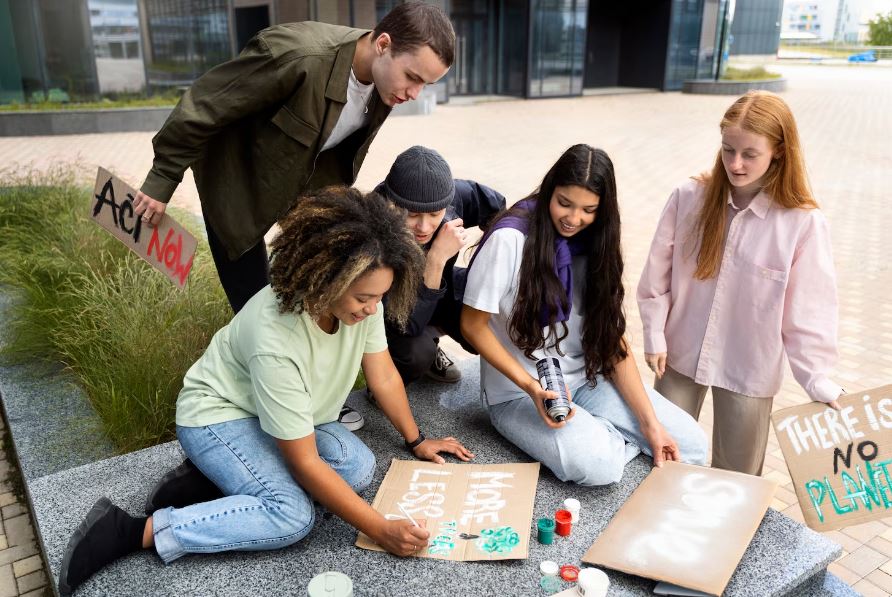
One of the members of the Youth Leadership Team, Thai-sha, recently wrote a reflection on her first year working on the project. She didn’t speak in the polished, kind manner that charities typically do. It sounded more like someone was actually figuring things out as she went. This seems to be the point. From the social action efforts of the Jo Cox Foundation to the grassroots organizations that IVAR documented, the charities and foundations that connect communities consistently reach the same unsettling conclusion. Programs that are created without the people they are supposed to assist often fail quietly at first, then loudly.
The methodological mash-up is what makes Bridging Divides intriguing. wearable technology that monitors biological signals. hormone tracking. lengthy qualitative interviews. A public health department would cringe at the scale of data analysis. The wager is that hormones, sexism, or academic pressure are not the only factors that contribute to anxiety and depression in young women. The exchanges are important. It’s still unclear if the research will result in something useful or just another well-cited paper. It’s early.
Under a similar name, Bridging Divides, Healing Communities, the Berkshire Taconic Community Foundation has been operating a Youth Film Lab across the Atlantic. Different nation, different medium, same instinct. Give the tools to the teenagers. Move aside. Observe how they utilize the area. It’s difficult to ignore how frequently this pattern appears in 2026; it seems as though a generation of charities has finally come to terms with the fact that teaching young people about their own well-being was never going to be effective.
Nothing has been resolved by Bridging Divides yet. No one is acting in a different way. However, as this develops, there seems to be a change in the way communities deal with the individuals they have spent decades discussing rather than interacting with.