
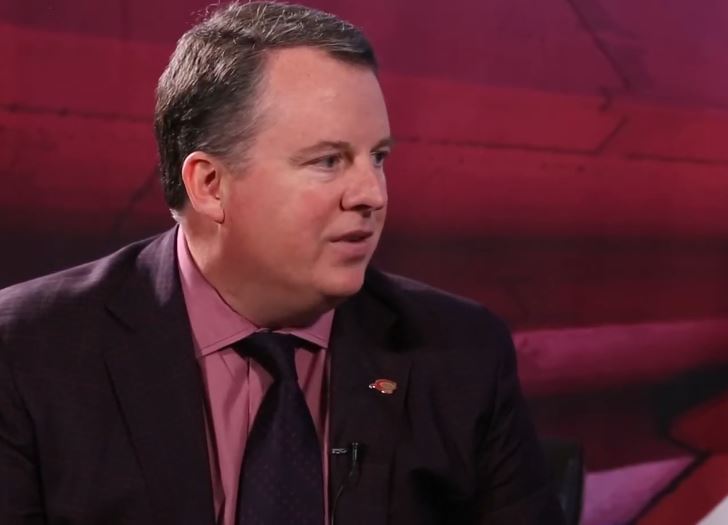
Chad Williams didn’t appear to be a man who was going to take home $3 billion. Soft-spoken and folksy, this executive would genuinely start a board meeting with a prayer. He operated QTS for many years from Overland Park, Kansas, a sleepy suburb that hardly anyone in the data center industry would consider to be a center of anything. However, by the spring of 2025, he was listed among the new billionaires of the artificial intelligence boom, along with the founders of CoreWeave and a few executives whose names the majority of Americans still couldn’t pronounce.
His route there was peculiar, almost unyielding. Williams didn’t have a background that would make him a future infrastructure tycoon—he had previously managed his family’s auto salvage company. He and his spouse, Jeannie, purchased an abandoned office building in Kansas in 2003 as a remnant of the dot-com bust. It also had a small data center. At the time, that seemingly insignificant detail proved to be crucial. In 2005, after more than a year of pursuing a closed Qimonda semiconductor plant near Richmond, Virginia, through bankruptcy court, he purchased another facility in Georgia. Twelve million dollars were contributed. The result was a campus worth billions of dollars.
| Detail | Information |
|---|---|
| Full Name | Chad L. Williams |
| Age (as of 2025) | 54 |
| Hometown | Overland Park, Kansas, United States |
| Estimated Net Worth (2025) | ~$3 billion |
| Known For | Founder & former CEO, QTS Realty Trust |
| Company Founded | 2003 |
| Major Exit Event | Blackstone bought the remaining stake in March 2025 |
| Initial Acquisition | $10 billion all-cash deal, August 2021 |
| Current Venture | Quality Growth Companies (QGC) |
| Family | Wife Jeannie, three children |
| Education | University of Kansas |
| Religion | Christian (known for opening meetings with prayer) |
The figures on his wealth have never been reliable. His stock holdings were estimated by the SEC in 2021 to be between $17 million and $21 million, which is a very respectable fortune but far less than the current headline figure. One factor contributed to the increase from tens of millions to three billion: Blackstone. After paying $78 per share to take QTS private in a $10 billion deal in 2021, the private equity behemoth invested heavily in the company for four years. When Williams departed in early 2025, QTS had grown into a $60 billion company and the largest landlord of data centers in North America. Blackstone acquired him for about $3 billion to end the chapter.
The parting wasn’t tidy. According to Bloomberg‘s July report, disagreements had been growing for some time. Williams desired to expand brick by brick. Blackstone desired to travel more quickly, especially throughout Europe. There was disagreement over whether QTS should retain ownership of some sites or give them to Blackstone’s institutional real estate division. He retaliated. Eventually, the board decided that a new leader was needed for the next era. They were taken over by two Virginian co-CEOs. After making one last speech in Ashburn, Williams returned home.
In a sense, what he did next was perfectly consistent with his brand. He chose not to retire. He didn’t purchase a well-known yacht. He returned to managing Quality Growth Companies, the Kansas family business where QTS had its start. He brought with him his own trademark, the red Q logo. The idea of a Midwestern founder cashing out of a global asset manager’s portfolio and stealthily returning to the family business seems almost archaic. It’s difficult to ignore the fact that those who created the AI rush’s picks and shovels are occasionally the ones least eager to play the role.
It remains to be seen if the $3 billion estimate is sustainable. The AI infrastructure trade has recently shown signs of weakness, and even JPMorgan executives have warned of a potential correction. Stock-based wealth has a tendency to fluctuate. For the time being, however, the man who once transformed a salvage yard into a real estate empire appears to have accomplished what very few founders do: leaving the company at the top, on his own terms, with the money already in the bank.