
Children pick up most of what shapes them somewhere between the climbing frame and the chalkboard. Teachers are aware of this. Parents have suspicions. However, only a small portion of what they actually learn is covered by the curriculum we give them, which is neatly printed, color-coded, and scheduled by the bell. Somewhere quieter is where the remainder, the part that sticks, originates. It often originates from outside.
One type of instruction takes place in the absence of a teacher. It’s the lesson a six-year-old learns when she observes a snail moving across a damp leaf and understands that things don’t always go as planned. Or when a muddy-kneed boy discovers that a partially constructed dam in a stream will collapse if the smaller stones are not inserted first. For that, no worksheet is distributed. It is not graded by anyone. However, something takes hold.
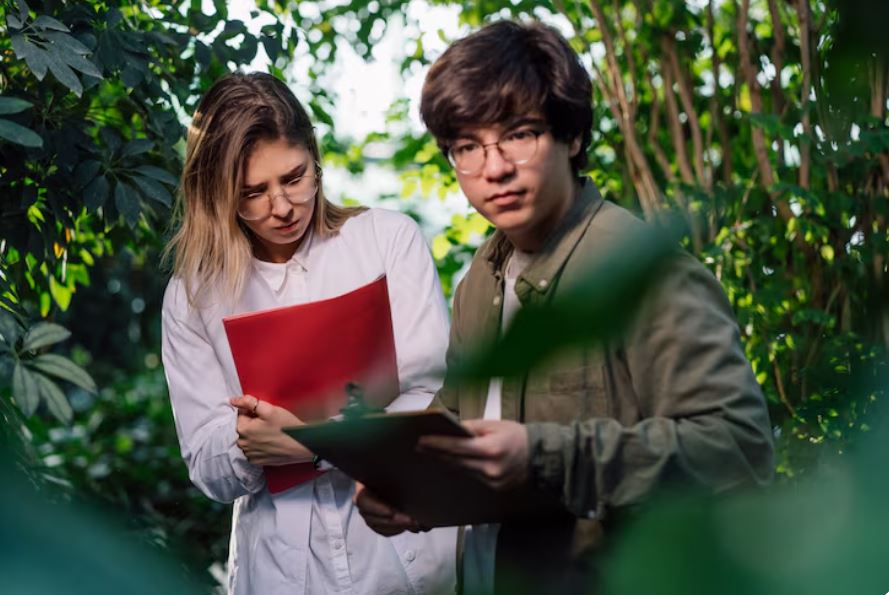
For decades, educators have discussed the hidden curriculum. The expression typically refers to the unwritten rules of school life, such as deference to authority, courteous queueing, and knowing when to speak and when to keep quiet. However, the most significant form of this hidden curriculum might not even take place in classrooms. The lessons are slower, less spoken, and much more difficult to fake when they take place outside.
You begin to notice things when you observe kids outside. They bargain. When a beetle shows up, they completely forget about their argument about who gets the bigger stick. They discover that rain isn’t always a cancellation; sometimes it’s just the rain. It’s difficult to describe the feeling that nature doesn’t work for them. It doesn’t change the tone. The picnic is cut short by a storm. Before the picture, a bird takes off. The lesson, if you can call it that, is that their preferences are not the foundation of the world. Few classrooms are able to teach that in such a tidy manner.
Shinrin-yoku, or forest bathing, is a term used by the Japanese. It sounds soft, almost ornamental, until you spend an hour in a real forest with a fidgety child and watch them gradually calm down. Something is going on there that doesn’t appear on a report card. Scholars have attempted to quantify it, primarily with conflicting outcomes. Levels of cortisol decrease. The duration of attention increases. However, the figures seem flimsy in comparison to what you see, which is a child who arrived dispersed and left steadily.
It’s difficult to ignore how much of this we’ve subtly erased from childhood. The length of recess has decreased. Back seats have replaced walking to school. In many neighborhoods, trees are no longer climbable but rather ornamental. All of this did not occur by decree. Decision by decision, fence by fence, it simply drifted in that direction. It has also thinned out the hidden curriculum of nature, which taught generations how to wait, how to fail quietly, and how to be a part of something bigger than a classroom.
Some educational institutions are resisting. Bush schools in Australia, forest kindergartens in Germany, and nature programs making their way into regular American neighborhoods all appear to be pursuing the same goal. Letting kids interact with the real, somewhat uncaring world is the best way for them to learn. It’s unclear if this turns into a movement or a footnote. However, the desire feels genuine.
Nature rarely teaches neat lessons. There are no subsequent parent-teacher conferences, learning objectives, or rubrics. Just the tedious task of listening. Perhaps the most important lesson that no textbook can impart is that certain types of knowledge only become apparent when you give up trying to learn.