
On a Tuesday morning in early spring, somewhere on the edge of a woodland in Surrey, a sixteen-year-old who hasn’t spoken in front of others for almost a year discreetly gives another teenager a knife and a length of rope and demonstrates how to start a fire. He receives no congratulations. No therapist records it. The moment goes by without comment, just like the majority of real moments do. However, the individuals in charge of the program are already aware that something has changed in him because they have seen it occur in the past.
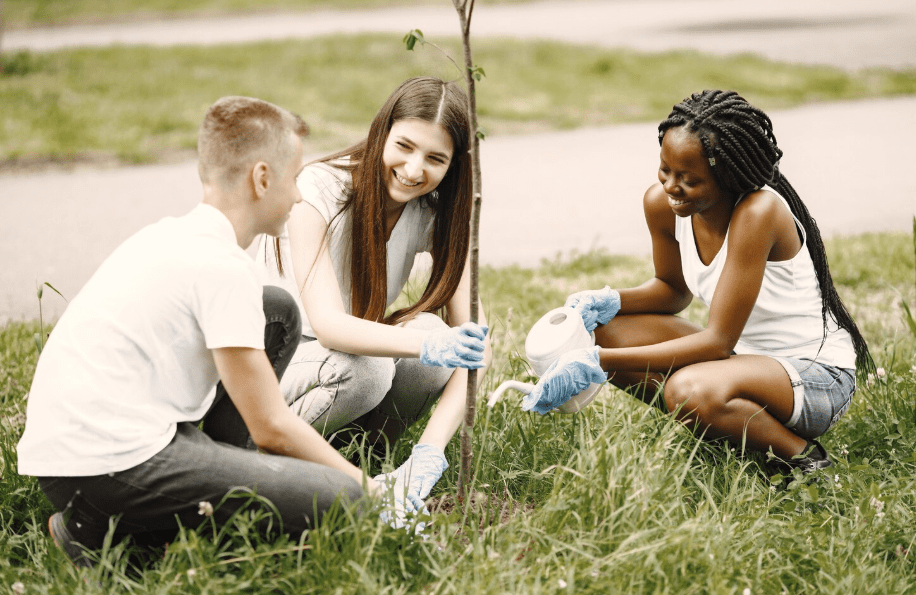
When the brochures are removed, this is what nature-based youth work looks like in 2026. Not outdoor education in the formal sense, not adventure travel, but something more subdued and difficult to describe. The Wilderness Foundation, Dose of Nature in the UK, and an increasing number of smaller European organizations have been working with young people who have, by most conventional measures, fallen out of the system for years. anxious, reclusive, jobless, occasionally seeking asylum, and frequently simply worn out by the architecture of contemporary adolescence. Although the interventions—walks, gardens, animals, and water—seem almost embarrassingly straightforward, the results are becoming more difficult for skeptics to ignore.
Stronger nature connectedness was associated with lower stress, fewer psychosomatic symptoms, and a discernible improvement in social cohesion, especially among migrant and multicultural youth, according to a 2025 systematic review published in the Journal of Environmental Psychology. Another review that was published in Child and Adolescent Mental Health tracked improvements in resilience, social skills, self-regulation, and attention across twenty-two studies. The figures are not eye-catching. However, they are persistent—the kind of discovery that consistently reappears across widely disparate approaches and nations, which is typically how you know something is authentic.
| Detail | Information |
|---|---|
| Subject | Nature-based programmes for young people |
| Age Range Most Studied | 11 to 26 years |
| Common Programme Types | Forest school, care farming, surfing therapy, gardening, conservation work |
| Reported Benefits | Reduced anxiety, improved self-esteem, stronger social skills, sense of belonging |
| Key Research Concept | “Soft fascination” — gentle sensory engagement that restores attention |
| Target Beneficiaries | Young people not in education, employment or training; socially isolated youth |
| Common Settings | Woodlands, coastlines, urban parks, working farms, community gardens |
| Theoretical Frameworks | Attention Restoration Theory; Stress Reduction Theory |
| Research Source Reviewed | Springer Nature, ScienceDirect, Taylor & Francis |
| Most Influential Element | Quality of mentorship and relational space, not just time outdoors |
| Long-Term Outcome | Sustained well-being, environmental stewardship, civic engagement |
| Population Particularly Helped | Boys, migrant youth, and young people in precarious circumstances |
Observing these programs up close reveals how little they resemble clinical therapy. Neither a couch nor a clinically abbreviated treatment plan is present. A young woman who hasn’t had a job since she dropped out of school ends up feeding goats in the morning and learning to recognize three different species of beetles by lunchtime. The work is completely unglamorous, repetitive, and a little filthy. Additionally, it gives her something that resembles a role—possibly for the first time in years. This is referred to by researchers as “purposeful activity.” The young people themselves just keep returning; they hardly ever give it a name.
Even though mental health is the term used to describe it, there’s a feeling that what’s really going on here goes beyond mental health. In many wealthy nations, adolescence has become an exceptionally thin experience that is algorithmic, indoor, monitored, and frequently lonely in ways that previous generations would find difficult to comprehend. Nature programs appear to have the opposite effect. They cause time to slow down. Instead of making belonging performative, they make it tangible. In Donegal, a teen planting hedgerows is not creating a personal brand. All he’s doing is creating hedgerows.
It is difficult to ignore the fact that the research indicates that nature itself is not the most significant factor. It’s the caliber of the connections made within it, such as the unassuming, patient adult who observes when someone is undernourished or who teaches knotting without turning it into a meal. The setting is provided by nature, and the meaning is still provided by humans. It is genuinely unclear whether public funding will continue to acknowledge this, particularly as mental health budgets in the UK and throughout Europe become more constrained.
It feels like something quietly important is being rebuilt in these fields and forests as we watch this happen. Not a remedy. Not a program in the sense of bureaucracy. Something more akin to a reminder: when young people are given a place to fit in and something worthwhile to do, they usually find their way back. slowly. Frequently without expressing it. and typically with their hands in the ground.