
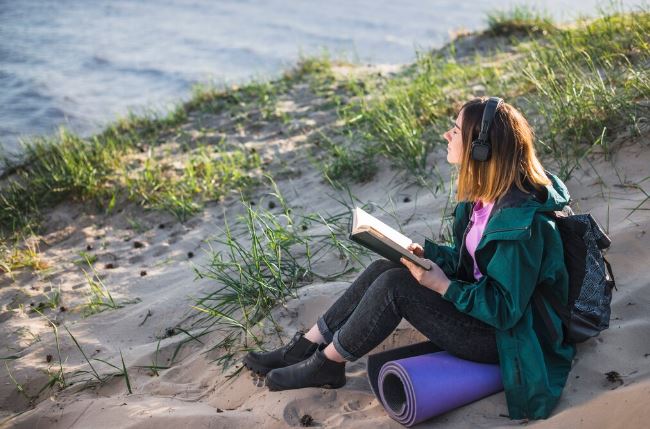
When students go outside, they frequently change in ways that are remarkably similar across grades and geographical areas, as if nature flips a secret switch that is rarely reached in classrooms. Teachers portray this change with a sense of optimism that is especially welcome at a time when children’s minds are carrying far more than they ought to. In remarkably effective, almost instinctive ways, they observe students unwinding, concentrating, and re-establishing a connection with their own curiosity when they are outside. The expression “grounded and growing” has become a common shorthand, describing how outdoor education soothes the contemporary student’s mind in a way that seems remarkably obvious to anyone who observes.
| Aspect | Key Points |
|---|---|
| Definition of Outdoor Education | Learning that intentionally takes place outside classrooms, using nature as a dynamic teaching environment. |
| Core Benefits | Reduced stress, improved focus, emotional regulation, social growth, increased creativity, sensory grounding. |
| Why Modern Students Need It | Rising anxiety, digital fatigue, overstimulation, reduced unstructured play, academic pressure. |
| Leading Practices | Forest Schools (UK), Creek Studies (UFS), Udeskole (Denmark), Nature-based ECEC (Finland). |
| Research Summary | Outdoor learning supports SEL, boosts cognitive skills, improves well-being, strengthens motor skills. |
| Authentic Reference | https://eastsideacademy.org/blog/the-role-of-outdoor-classrooms |
In spite of disparate environments and student bodies, educators from schools such as United Friends School, Eastside Academy, and Think International Schools have exchanged stories over the past few years that resonate with one another. With educators working to provide peace, connection, and meaningful growth in settings that frequently challenge children’s boundaries, outdoor learning has gathered momentum in the last ten years that feels both necessary and long overdue.
One teacher told me that when their class moved to a shaded area under an old maple, her most nervous student, who was typically quiet and reserved in class, started reading aloud with confidence. She claimed that the experience felt especially transforming, akin to the change that occurs when a shy child at last makes friends who understand them. These tales are not uncommon. Teachers are delighted by how simple contact with nature seems to reset overstimulated minds, and these stories are becoming commonplace in faculty rooms.
The physiological undercurrent of these changes has been emphasized by researchers in recent days. Young learners’ cortisol levels are regulated by outdoor light, natural movement, and mild sensory input, which lowers stress in ways that indoor interventions cannot. The outdoors is surprisingly effective at bringing students who are used to constant digital stimulation back into their bodies. After outdoor sessions, teachers report much less conflict, noticeably better cooperation, and more peaceful classroom transitions.
Schools are changing the emotional terrain of education by utilizing natural settings. A real-world example is provided by United Friends School’s creek studies, where students wade into shallow water to gather samples, draw wildlife, and record seasonal variations. In addition to being rich in academic content, these exercises are also very effective at calming down agitated students. After going to the creek, one teacher said her students came back “as though someone had quietly smoothed out all their edges.”
The key component, according to educators using outdoor learning, is autonomy. Instead of being passive recipients, students become active participants who decide how to investigate, inquire, and work together. This organization reflects the “choose your own adventure” theme found in Canadian research, where educators found that outdoor learning environments inherently foster initiative and self-assurance. Children’s motivation becomes genuine rather than prescribed when they choose their own exploration routes, such as scaling logs, drawing leaves, or testing the quality of the water.
Outdoor education emerged as a lifesaver during the pandemic, when stress was exacerbated by remote learning. Schools that couldn’t get together inside found ideas outside. Some established makeshift classrooms in courtyards or fields, while others included outdoor reading circles, nature journaling, and walking lessons. Since the introduction of these modifications, numerous educators have noted that when regular outdoor components are incorporated into lessons, students exhibit notably more tranquil emotional states.
Not just schools in rural or suburban areas are adopting this change. Urban educators are now very adept at converting small outdoor areas into classrooms. Pocket parks become science labs, quiet courtyards become reading circles, and rooftops become art studios. Pupils gain acute sensory awareness that translates surprisingly well into academic tasks as they learn to notice minute changes in light, sound, and movement.
According to one urban school teacher, her students would congregate around a single slit of sunlight to compose observational poetry, producing lines that, in spite of the limited area, felt intensely intimate. She claimed the encounter made her realize that even brief exposure to nature can have a profound effect on restless minds yearning for tactile, sensory richness.
Peer dynamics are also altered by outdoor learning in ways that are rarely achieved in classroom settings. Students share tools, negotiate roles, and work together impromptu without desks separating them. A group constructing a fort out of fallen branches quickly discovers that compromise and listening are essential to success. These exchanges quietly but effectively increase emotional intelligence. Students learn to support rather than compete as they begin to recognize each other’s strengths and weaknesses. Instructors often observe that students who struggle with social cues on the inside become surprisingly self-assured on the outside, driven more by instinct than by guidance.
Outdoor education offers experiences that are particularly memorable for younger students. Many remember the sensation of a ladybug on a warm leaf, the weight of soil when sowing seeds, or the delight of recognizing a bird by its sound. No worksheet can replace the learning power of these sensory anchors. Children’s learning becomes embodied—something they experience rather than memorize—when they move their bodies, touch textures, and notice changes.
One kindergartener proudly said, “My plant is growing because I take care of it every day,” during a gardening class. According to the teacher, this instance demonstrated a growing sense of pride and responsibility in addition to plant science. These kinds of moments are especially creative because they skillfully combine academic knowledge, emotional development, and sensory experience.
The advantages for older students are distinct but no less compelling. Students learn how the open air alters tone, voice, and emotion when Shakespeare or Greek scenes are performed outdoors in English classes. Outside, where social pressures appear to be much lessened, reading aloud becomes easier. Teachers frequently claim that sitting in a circle of grass instead of rows of desks makes even reticent readers more open to sharing.
Science classes thrive in the great outdoors. Concrete and instantaneous learning can be obtained by measuring tree height, analyzing soil layers, or studying insect behavior. Math becomes useful. Biology is made visible. Curiosity takes on a life of its own. Students frequently comprehend academic material more quickly and retain it longer when it is in harmony with natural rhythms.
Beyond enhancing academic performance, outdoor learning fosters environmental stewardship. Students gain an appreciation for their environment when they spend time outdoors gathering samples, caring for gardens, or researching ecosystems. This relationship upholds principles like respect, accountability, and long-term planning that many adults wish to see more widely. According to teachers, students frequently take these habits home with them, persuading families to visit nearby parks, plant gardens, or recycle more.
Students’ emotional lives are stabilized by outdoor education, especially when it is implemented regularly. In the face of excessive stimulation, it establishes a safe haven where students can take deeper breaths, think more clearly, and relate to others more honestly. When students come back inside feeling noticeably calmer, more focused, and ready to learn—as if the outdoors helped untangle the tangled threads of their day—that is the true triumph for teachers.
“Grounded and growing” is no longer just a slogan. It depicts a movement that is changing the way students think, feel, and learn. It serves as a reminder that when given access to open space, fresh air, and freedom to explore, young minds flourish. Additionally, it marks a positive trend toward classrooms that place equal emphasis on students’ well-being and academic performance, preparing them for a world in which composure and resilience are necessities rather than extravagances.