
In Northern Ireland, planting potential has evolved into a pragmatic manifesto, with young people using storyboards and spades to match civic and ecological repair in a way that is rooted in local knowledge rather than theoretical abstraction, purposefully hands-on, and optimistically ambitious.
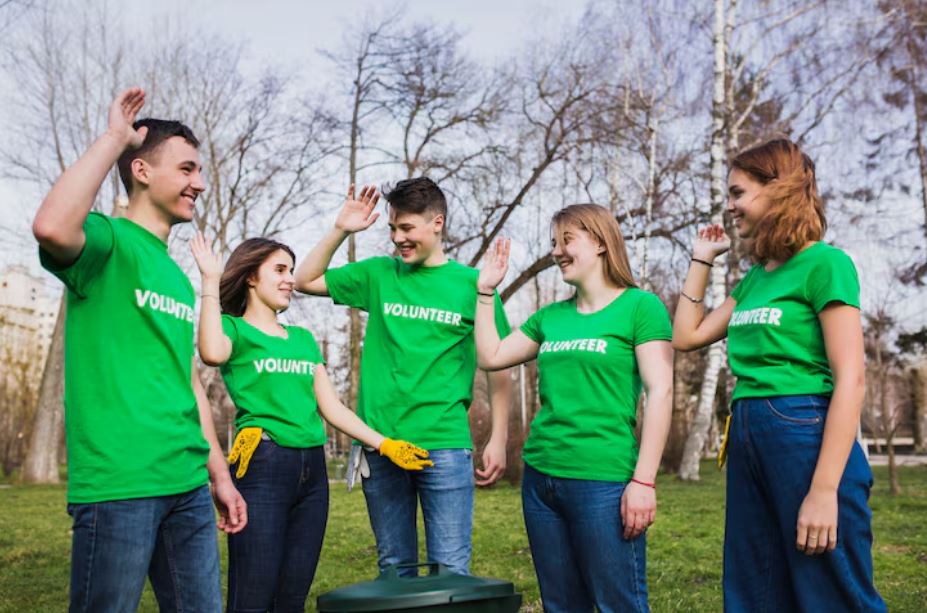
With muddy hands and focused eyes, students from Christian Brothers Grammar School and Omagh High School tilled a patch of former pasture on a soggy spring morning at Baronscourt Estate. Later that afternoon, the same students sat coding a narrative game that acted out the life of an oak sapling, teaching them both persuasive storytelling and propagation techniques. This combination proved especially novel because it taught stewardship in both action and argument.
| Label | Information |
|---|---|
| Project Theme | Planting Potential: Youth-led reforestation and community empowerment across Northern Ireland |
| Lead Organisations | Hope For Youth NI; Pushkin Trust; Reforest Nation; Plant-for-the-Planet; YouthAction Northern Ireland |
| Youth Reach | Hundreds of youth groups; cross-community programmes such as Pushkin Pathway and Our Generation; thousands engaged since 2020 |
| Trees & Impact | Local projects focused on native species and biodiversity; national initiatives reporting 1,000,000+ trees in Irish rewilding campaigns |
| Funding & Support | Grants from Hope For Youth NI, PEACE IV / SEUPB funding, local council match funding, philanthropic and corporate partners |
| Key Activities | Tree planting, habitat restoration, environmental education, creative media projects, cross-community youth exchanges, leadership training |
| Social Outcomes | Increased youth confidence, cross-community trust, emotional resilience, employable skills, green entrepreneurship and local stewardship |
| Reference | Hope For Youth NI — https://www.hopeforyouthni.com |
A strategy that combines vocational learning with emotional literacy, the hybrid model—environmental facilitation in the morning and creative media in the afternoon—was partially funded by Hope For Youth NI and supported by the Nerve Center. It produces young participants who can measure tree survival rates and create a video that persuasively explains why that survival matters to neighbors.
The reasoning is elegantly straightforward and incredibly powerful: ecology ceases to be a distant concept and turns into a tool for empowerment when planting is incorporated into the curriculum. Planting projects now establish weekly rituals—teams mapping sites, selecting native species suited to microclimates, and monitoring biodiversity—that foster patience and project management just as much as they restore hedgerows in areas where youth disengagement was once remarkably prevalent.
Infrastructure funding has been crucial, but social capital has proven to be the most resilient. With the help of local trusts, corporate partners, and PEACE IV and SEUPB grants, programs have been able to transition from one-time ceremonial plantings to sustained stewardship, which includes biodiversity monitoring, follow-up maintenance, and local education initiatives that keep planted areas vibrant and communities engaged. The likelihood that seedlings will be forgotten after a single weekend of publicity is greatly decreased by the combination of institutional support and grassroots ownership.
At a community orchard project where I went, an elderly neighbor who had been skeptical at first said to a teenager who had assisted with planting, “You’ve planted more than trees; you’ve planted patience.” The truth can be conveyed in brief sentences. Cultivation becomes relational, as demonstrated by that brief but impactful exchange: people tending saplings also tend civic ties that have been weakened by neglect and history.
The projects are social laboratories rather than just ecological exercises. In practice, trust can develop much more quietly and sustainably than formal dialogues because shared planting days between schools from various communities create low-friction contact zones where teenagers meet over spades rather than slogans. These human interactions—children laughing while digging, exchanging gardening advice—are the kind that policy papers occasionally depict in a clinical manner but infrequently create in such a natural way.
Celebrity advocacy and global trends have increased awareness without replacing local initiative. Community groups leverage funding when public figures draw attention to habitat loss or climate urgency while maintaining youth leadership at the center. This results in fundraising attention that flows into micro-grants, which in turn support paid trainee positions and social enterprises, such as young people operating nurseries, selling native saplings, and hiring local farmers to repair hedgerows. These kinds of projects can develop into revenue streams that support green entrepreneurship and are surprisingly inexpensive to launch.
In order to accommodate this blended pedagogy, educational systems have started to change. By integrating environmental modules into STEM and citizenship curricula, schools working with Hope For Youth NI have broken down academic silos and made ecology relevant rather than abstract. Teachers are making ecological literacy as measurable and valued as exam skills by tying seasonal labor—planting, mulching, and recording—to classroom instruction. This is important because it makes ecological literacy more approachable for students who learn best by doing rather than just reading.
Evaluation and monitoring have also advanced. Early indicators indicate that participants’ optimism has significantly improved, and teachers report that students who previously seemed disengaged arrive at planting days alert, focused, and proud. Projects trained by environmental NGOs and university partners now track survival rates, species diversity, and youth outcomes like reported confidence and civic participation. These are minor facts with significant ramifications: civic agency can be learned via experience.
There are still difficulties. Even the best plans can be derailed by weather patterns and soil conditions; maintenance calls for constant resources; and inclusion necessitates deliberate outreach to ensure that marginalized youth are not left out due to financial or logistical constraints. Programs that offer transportation subsidies, tools, and mentorship to young trainees have seen a genuine increase in participation, proving that accessibility is an operational issue rather than a philosophical one.
The cultural narrative that these projects have started to produce is remarkable: young people planting woods and orchards make them visible symbols of perseverance and healing, and their gradual development tells a longer story of recovery than any political speech can guarantee. These stories are picked up by local media, and legislators are increasingly incorporating reforestation into civic agendas after being convinced by data and visuals. They view trees as infrastructure that provides ecosystem services, recreational opportunities, and social cohesion.
One should not undervalue the work’s emotional component. Many participants find that planting has therapeutic benefits, offering a tangible output that combats isolation and a rhythm of care. After caring for a sapling for weeks, a shy teen began to speak up in group settings and subsequently applied for a traineeship in a community nursery, according to one youth worker. The transformative potential at the core of these initiatives is captured by that trajectory: quiet, steady, and human.
Reconciliation and employability are married in ways that are especially advantageous for post-conflict societies in Northern Ireland’s model, which stands out for its emphasis on cross-community contact and the creation of a vocational pipeline. This is in contrast to globally well-known campaigns like Plant-for-the-Planet. Practitioners are researching this replication potential—how to integrate art, ecology, and enterprise into a package that simultaneously rebuilds habitats and livelihoods—from Bosnia to rural areas elsewhere.